

The birds came first
The bird is the tree's oldest animal resident, and the trade built special hardware for it: the spring clip, which lets a glass songbird perch on a branch instead of dangling from it. Clip-on birds with tails of spun glass are among the most recognizable of all vintage German forms, made across the color range and still made today. A bird's tail is its condition report: original spun-glass tails survive delicately or not at all, and replacements are common enough that an intact original is worth a second look.
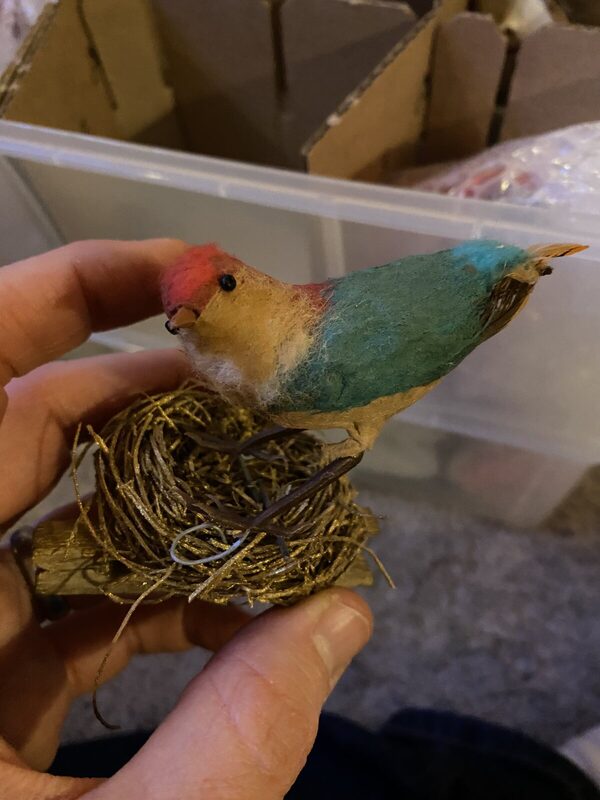
A bird on its nest
A spun-cotton bird from our shelves, red-headed and settled on a natural nest, in the vintage German craft manner. Cotton birds outlived their glass cousins by being too soft to shatter, a strategy the whole drawer might envy.
The wider zoo
Once mold-blowing made any shape possible, the menagerie grew without discipline or apology: dogs, cats, elephants, fish, frogs playing instruments, storks, pigs for luck. Some carried folk meanings, luck and prosperity chief among them, and some were simply the mold-carver having a good week. The old German catalogs and the modern revival houses agree on this much: people will hang an animal on a tree faster than they will explain why. Our own shelf's proudest absurdity, a glitter-backed blue whale, holds court in the figural drawer.
Reading the shelf
Animal figurals follow the glass drawer's rules, so the checklists there apply: paint style, silvering, cap hardware, and mold seams tell age better than a seller's story. Spun-cotton and felt animals are judged instead on material honesty, whether the aging of fabric, cotton, and glue makes sense together. Clips deserve their own look: period clips show simple stamped construction and honest spring fatigue. And because tails, ears, and wings lead with their chins, the storage guide's advice about individual compartments is nowhere more earned.