




What counts as figural
The trade uses the word for any ornament blown or molded into a representational shape: a bird, a pinecone, a Santa, a fish, a house, an acorn. The classic method is mold-blowing, glass inflated into a two-part mold, then silvered and painted by hand, and the seams of that mold are still one of the first things a practiced eye checks. Figurals reward close looking more than any other drawer of the Cabinet, because the painting is where the personality lives.
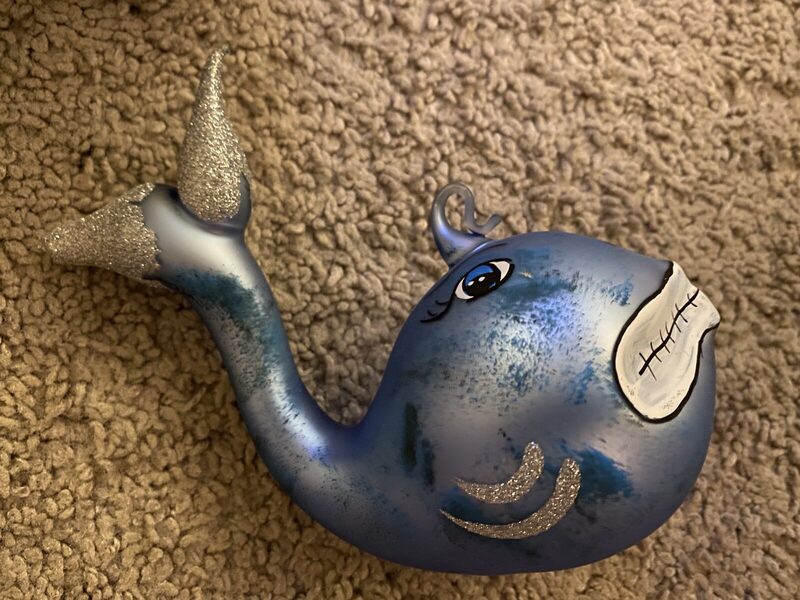
A whale in the pine boughs
A blown-glass blue whale from our shelves, glitter riding its tail and fin. Nothing about a whale belongs on a Christmas tree, which is exactly the figural drawer's argument for itself.
The German molds
The nineteenth-century Thuringian workshops built the figural vocabulary the whole trade still speaks: fruit and nuts, birds with spun-glass tails, fir cones, angels, Father Christmases with molded robes. Molds were carved, passed down, sold between families, and used for decades, which is why a "Victorian-style" bird may exist in genuinely old, midcentury, and modern pressings from the same lineage of molds. Age claims for figurals lean on paint style, silvering, and cap hardware more than on the shape itself, and our Hunting Vintage chapter shows how to weigh them.
The novelty century
Once ornaments were mass-market, the figural drawer absorbed whatever the culture was excited about: automobiles, airships, comic characters, spacemen. Collectors chase these period novelties precisely because they date themselves so well. A glass rocket is not just an ornament, it is a year in miniature, and the same logic drives today's collectible figurals, from travel pieces to the frankly ridiculous, which we love without apology.
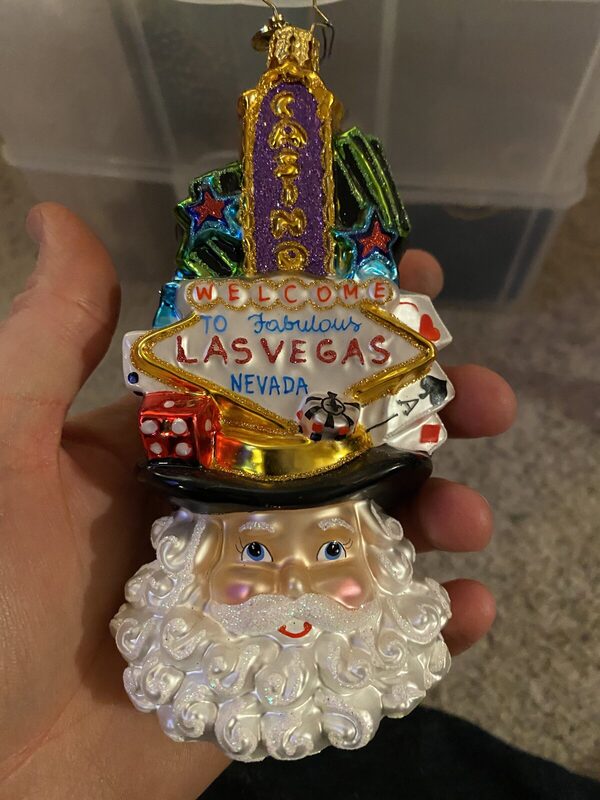
A Santa who has been to Vegas
An elaborately painted blown-glass Santa head from our shelves, wearing Las Vegas signage the way other Santas wear holly. The modern figural houses learned everything from the old molds, then developed a sense of humor.
The revival houses
From the 1980s onward, designers like Christopher Radko and houses like Old World Christmas rebuilt the market for elaborate European-made figurals, commissioning traditional workshops and reviving old forms at heirloom prices. Revival pieces are honest collectibles in their own right; they only become a problem when a secondhand listing lets them impersonate their ancestors. Check the marks, check the cap, and read our brand histories before assuming age. When a figural needs its paint or its dignity restored, the repair guide says what is safe to attempt.