Hallmark Keepsake
Hallmark launched the Keepsake Ornament line in 1973 and invented the modern collectible ornament: dated, themed, and issued in numbered annual series that collectors chase for decades. The line runs on a yearly rhythm of summer premieres and fall releases, an in-house studio of named artists designs it, and the resale market for retired pieces is deep enough to have its own price guides. Series logic rules the value: first-in-series pieces and unbroken runs carry the premiums.
Christopher Radko
Beginning in the mid-1980s, Christopher Radko built the premium glass revival: mouth-blown, silvered, hand-painted ornaments commissioned from European workshops in the old styles, sold under a designer's name. The brand made elaborate figural glass a luxury category in America, and retired Radko designs trade actively on condition and packaging. Our craftsmen guide covers how to read the workmanship itself.
Shiny Brite
Importer Max Eckardt, working with Corning's machine glassblowing, put American-made glass ornaments in every dime store when the wars cut off German supply. The Shiny Brite name dominated mid-century American trees, and its wartime austerity variants (unsilvered glass, paper caps) are now a defined collecting niche. The full story is in our history guide.
Old World Christmas
Old World Christmas built its catalog on traditional German-style mold-blown figurals: fruit, birds, Santas, pickles, and hundreds of other forms in mouth-blown, hand-painted glass at accessible prices. For many collectors it is the entry point into figural glass, and its breadth makes it a common find on the secondary market.
Kurt S. Adler
Kurt S. Adler, Inc. has been a major American importer and designer of Christmas decorations since the mid-twentieth century, spanning glass, resin, wood, and licensed designs across a very wide catalog. Adler pieces turn up everywhere in inherited boxes, which makes the mark worth learning even if you collect in other directions.
The museum lines
Museums and institutions commission ornaments as shop pieces, and the good ones are serious objects: documented subjects, quality manufacture, and institutional boxes that identify the line outright. Two boxed examples from our own shelves:
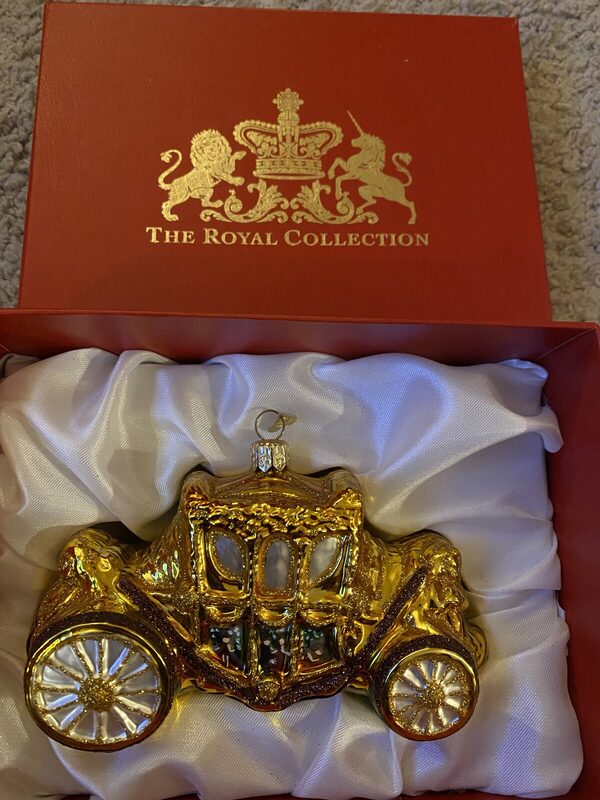
A boxed gilt coach
The box reads The Royal Collection: the retail line of the Royal Collection Trust. A blown-glass gilded state coach on satin, photographed as it lives in its box.
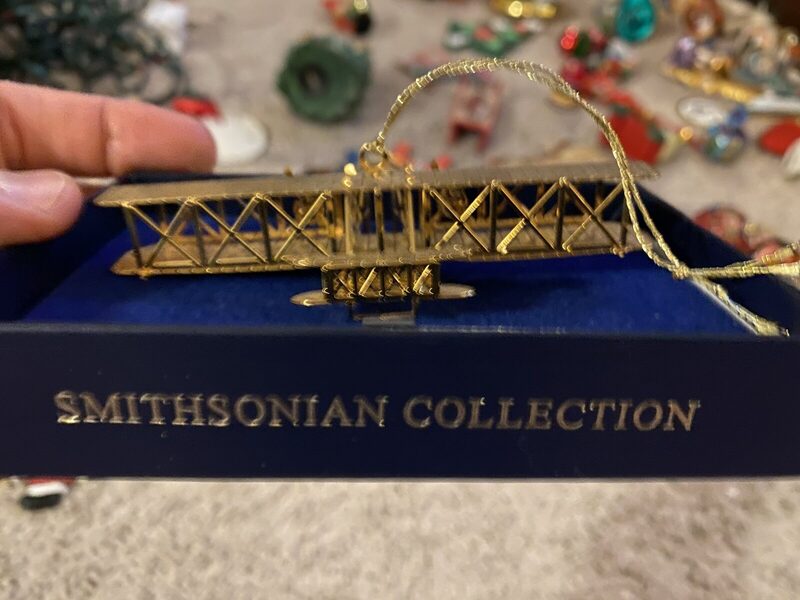
A boxed golden flyer
The box reads Smithsonian Collection: a pierced gold-toned metal early flying machine, the kind of institutional piece that comes with its own provenance printed on the packaging.