Nuremberg, Germany
The Nuremberg Christkindlesmarkt is the most famous Christmas market in the world, held on the Hauptmarkt square since at least the early seventeenth century. For ornament hunters the draw is the concentration of German craft stalls: blown glass, carved wood, and the city's own tinsel-angel tradition, the Rauschgoldengel. Go at dusk on a weekday; weekends are shoulder to shoulder.
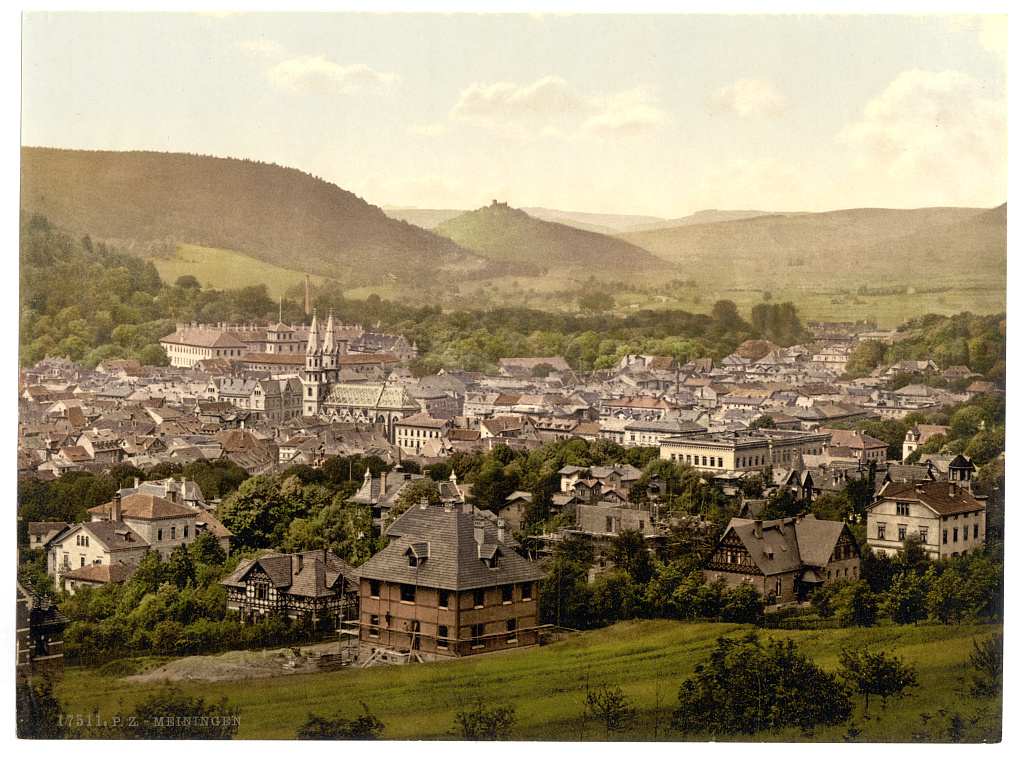
Thuringia, as the 1890s saw it
The valleys the glass came down from, on its way to every market square in this chapter.
Photochrom print, ca. 1890s. Library of Congress, Photochrom Prints Collection.
Dresden, Germany
Dresden's Striezelmarkt, first held in 1434, claims the title of Germany's oldest Christmas market. It sits at the heart of the Saxon craft country: the Erzgebirge mountain villages whose wooden ornaments, nutcrackers, pyramids, and smoking men define the German woodcraft tradition the way Lauscha defines glass. If your collection leans wood, this is the pilgrimage.
Strasbourg, France
Strasbourg's Christkindelsmärik has run since 1570, and the city calls itself the Capital of Christmas with a straight face. The Alsatian market blends French and German traditions, and its ornament stalls do the same: German-style glass alongside Alsatian folk decorations. The whole old town becomes the market, so plan more than one evening.
Vienna, Austria
Vienna's Christkindlmarkt in front of the Rathaus anchors a city full of smaller, craftier markets. Collectors do their best hunting at the artisan-focused markets like the one at Karlsplatz, where stall space favors makers over merchandise. Viennese glass and hand-painted work reward a slow lap before you buy anything.
Buying well at a market stall
- Ask who made it. The seller who blew or painted the piece will tell you exactly how; a reseller will change the subject. Our craftsmen guide covers the tells of genuinely handmade glass.
- Check the neck and cap on glass pieces before paying: the neck is the thinnest glass and travel is coming (see the hardware guide).
- Carry a small rigid box and tissue with you. Stall wrapping is newspaper at best, and a day of walking crushes bags.
- For the trip home, pack ornaments as carry-on in a rigid case, wrapped the way our storage guide describes. Checked baggage is where market finds go to die.
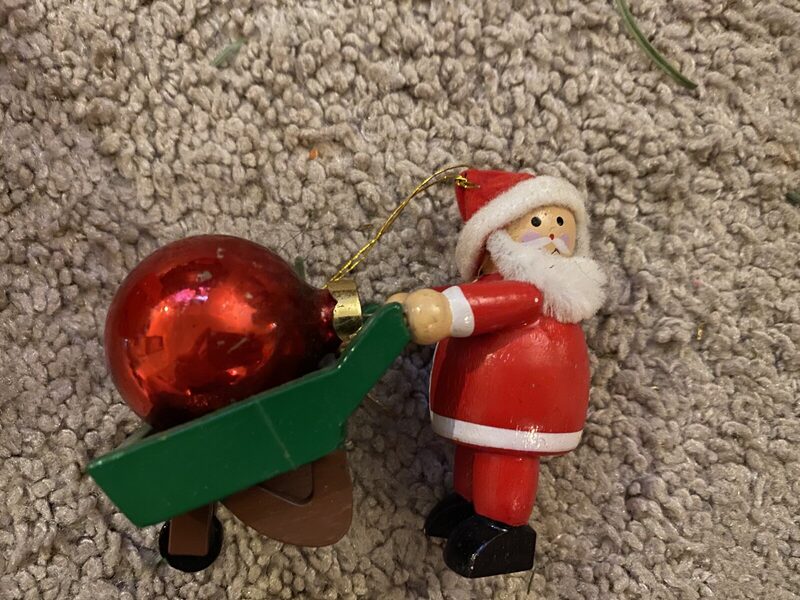
A wood Santa with a wheelbarrow
Painted wood, a red glass ball in the barrow: the German woodcraft language this page's Erzgebirge stalls speak.
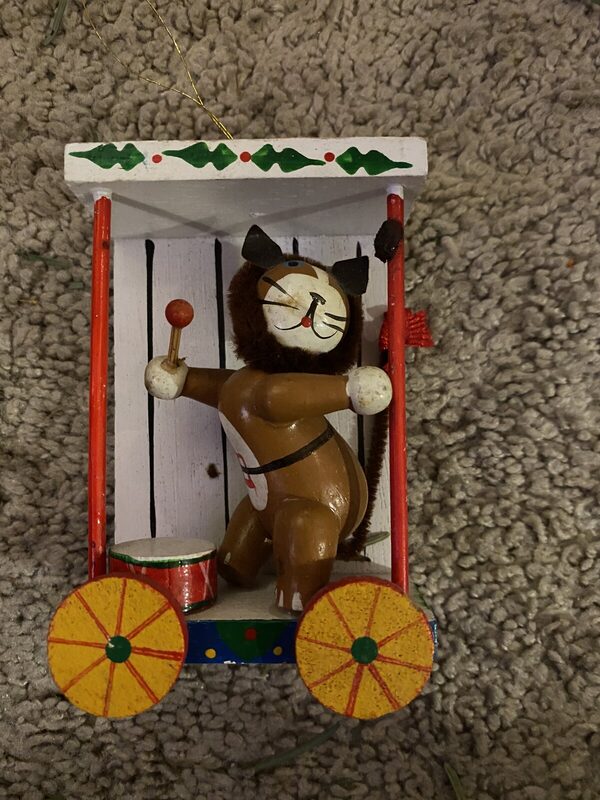
A circus cart in painted wood
A drumming cat on a decorated wagon, wheels and all. Stall craft from the same broad tradition.