Before glass: fruit, nuts, and paper
Decorated Christmas trees came out of German-speaking Europe, and the earliest trees wore what households had: apples, gilded nuts, paper flowers, and small baked goods. The decorated tree spread through the nineteenth century as royal families made it fashionable, most famously in England after illustrations of Queen Victoria and Prince Albert's family tree circulated in the late 1840s. What the tree wore was about to change completely.
Lauscha: the village that invented the bauble
The town of Lauscha, in the forested Thuringian mountains of Germany, had been a glassmaking center since the sixteenth century. By the mid-1800s its glassblowers were producing kugeln: hand-blown glass spheres, silvered on the inside to catch candlelight, made as Christmas decorations. The craft spread through the town's home workshops. Whole families worked the benches: blowers shaping the glass, silverers swirling the solution inside, painters and packers finishing the work.
Lauscha's ornaments became an export phenomenon. American retailers took notice, and none more consequentially than F.W. Woolworth, whose five-and-dime stores began importing German glass ornaments in the 1880s. They sold explosively, and for decades "a Christmas ornament" in America meant a German one.
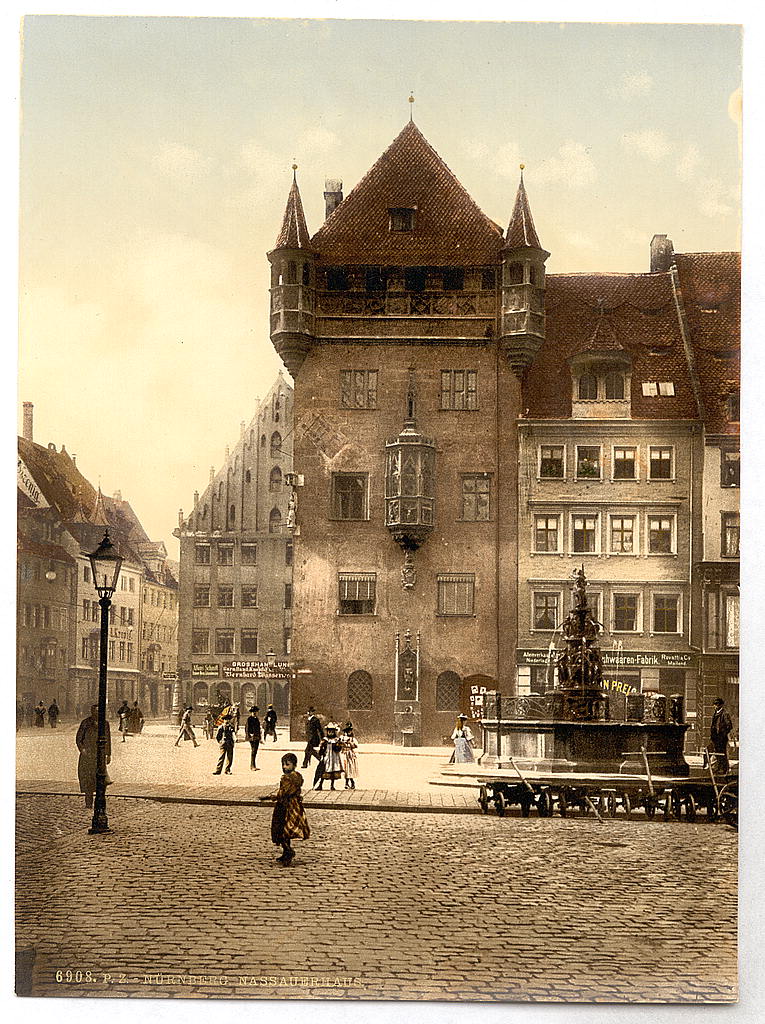
Nuremberg, in the very years
The market square the ornament trade filled each December. A photochrom print, exactly as the 1890s printed it.
Photochrom print, ca. 1890s. Library of Congress, Photochrom Prints Collection.
War, and the American century
Two world wars broke the German supply line. By the late 1930s, American production stepped in: Corning adapted machine glassblowing to turn out ornament blanks by the millions, and importer Max Eckardt's Shiny Brite brand put machine-made, American-decorated glass ornaments in every dime store. Wartime versions traded silvered interiors and metal caps for pastel paint and paper hangers, and those austerity ornaments are now collector pieces in their own right.
After the war, ornament making went global: Japan and Czechoslovakia became major exporters alongside a rebuilding Germany, each with a recognizable style. Mid-century American trees mixed them all together, which is why grandma's ornament box is a little atlas of the postwar world. Our countries of origin guide breaks down how to tell them apart.
1973: the ornament becomes a collectible
Hallmark launched its Keepsake Ornament line in 1973 and changed what an ornament was: dated, themed, released in annual series, and designed to be collected as much as displayed. Series collecting turned the ornament from decoration into an object with a following, a secondary market, and a calendar of its own.
The handmade revival
In the mid-1980s, Christopher Radko began commissioning ornaments from European glassblowing workshops in the old styles: mouth-blown, silvered, hand-painted. The revival he helped spark reconnected American collectors with the European workshops that never stopped, from Thuringian family firms to the Polish studios whose hand-painted work defines the high end today. Meet the makers in our craftsmen guide.
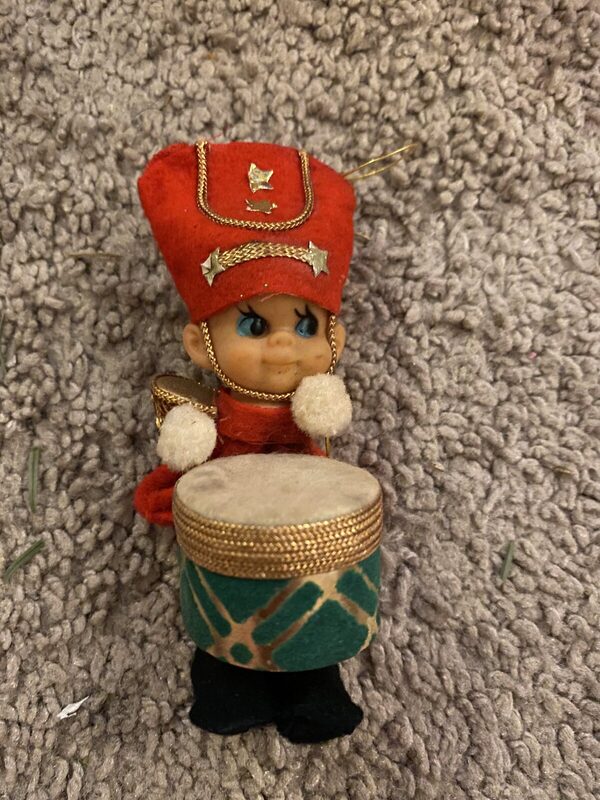
A mid-century drummer from the counter era
Felt, velvet, and a doll face: the material language of postwar counter ornaments. Our records on this one are still open.