




The five-point check
1. The neck. Under the cap is where chips hide, and a chipped neck is the fatal flaw: it weakens the piece and halves the value at best. In person, ease the cap out and look; online, ask for a photo of the neck bare. A seller who won't photograph the neck has answered your question.
2. The cap. Caps should suit the age and origin claimed: simple stamped brass on old German pieces, wartime paper caps on austerity American glass, and honest oxidation on both. Bright shiny caps on a "century-old" ornament mean a replacement at minimum; replacements are acceptable when disclosed and discounted, and a tell when they aren't.
3. The silvering. Interior silvering fails with age in patches, runs, and clouding, a pattern hard to fake convincingly. Perfect silvering on very old glass happens, but it is the exception that demands better provenance. No silvering at all can mean a wartime unsilvered piece, which is its own honest and collected category.
4. The paint. Old paint wears where hands and branches actually touched: high points, edges, around the neck. Uniform dullness applied to fake age looks like weather, not like use. Bright intact paint is fine on a piece stored well; it just moves the burden of proof to the rest of the checklist.
5. The weight. Old mouth-blown glass runs thin and light; many reproductions run heavy. Weight is the hardest tell to photograph, which is why in-person buying still teaches fastest, and why our starter lots roundup recommends learning on inexpensive mixed lots first.
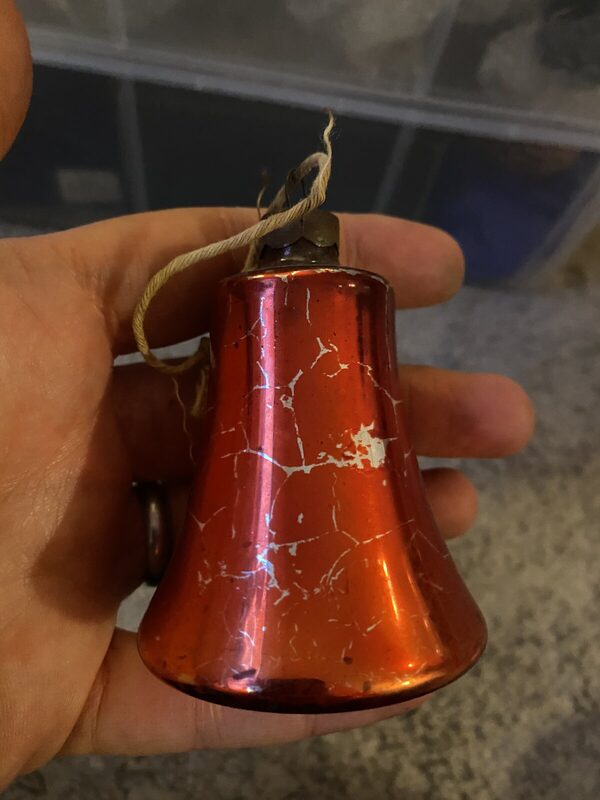
What honest age looks like
A red glass bell from our shelves: paint worn through to the silvering exactly where a century of fingers and branches would wear it. Every point on the checklist above is legible in one photograph, which is why this bell keeps being the Annual's teaching piece.
Pricing without folklore
Completed-sale prices are the only honest guide: on eBay, filter to sold listings and read what pieces actually brought, not what optimists ask. Rarity claims are checkable against the type pages of the Cabinet, and "rare" in a listing title is a keyword, not a fact. Buy the piece, not the story, and buy what you want to live with; the market rewards patience and punishes urgency in roughly equal measure.
After the purchase
Get it home alive per the storage guide's packing advice, clean it only as far as the cleaning guide's conservation sources allow, and if it needs more than dusting, read Restoration & Repair before attempting anything. A vintage piece survived this long without you; the care wing's whole doctrine is to not be the century it didn't survive.