The five-and-dime counter
F.W. Woolworth's stores began importing German glass ornaments in the 1880s, and the dime-store counter became the place ordinary American families bought their glass (the full supply-chain story is in our history guide). For decades, a dollar at Woolworth's or its rivals dressed a tree, and mid-century dime-store glass from those counters fills inherited ornament boxes to this day.
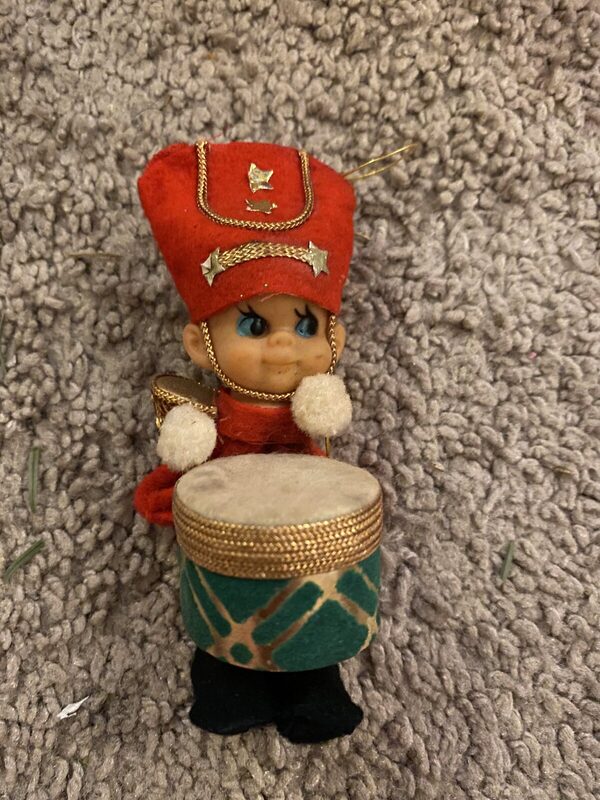
A velvet drummer from somebody's counter
A felt-and-velvet drummer boy with a doll face, the kind of piece that came home from a mid-century counter by the dozen. Our records on this one are still open.
The Wish Book
The Sears Christmas catalog, the Wish Book, arrived each fall from 1933 onward and turned Christmas shopping into a family reading event. Ornaments, lights, and trim shipped to towns with no department store at all, and surviving Wish Book pages are now collector references for dating mid-century decorations.
The department-store windows
The grand downtown stores made Christmas retail theatrical: animated window displays, decorated floors, and trim-a-tree departments with house labels. Regional names like May Company anchored the season in their cities, and their store-brand boxes are quiet little regional history pieces when they surface at estate sales.
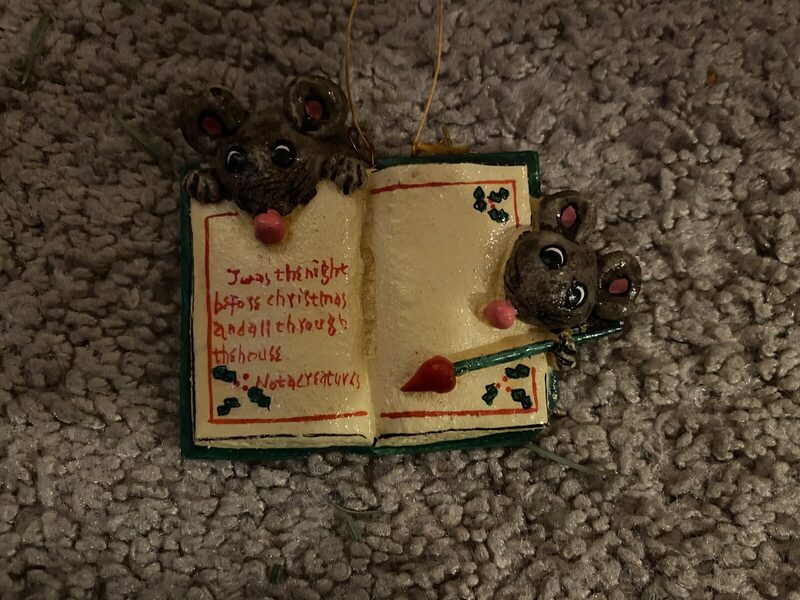
Two mice and a famous first line
A storybook piece (resin, to our eye; records still open): two mice reading an open book lettered with the opening of the Night Before Christmas. Exactly the kind of giftware the trim departments moved by the pallet.
What replaced them
The counters became big-box seasonal aisles, the Wish Book became the phone in your hand, and the trim department became specialty retail: year-round stores like the ones in our destinations guide, museum shops, and the secondary market where the old counter stock now circulates. The buying moved; the ritual survived.